
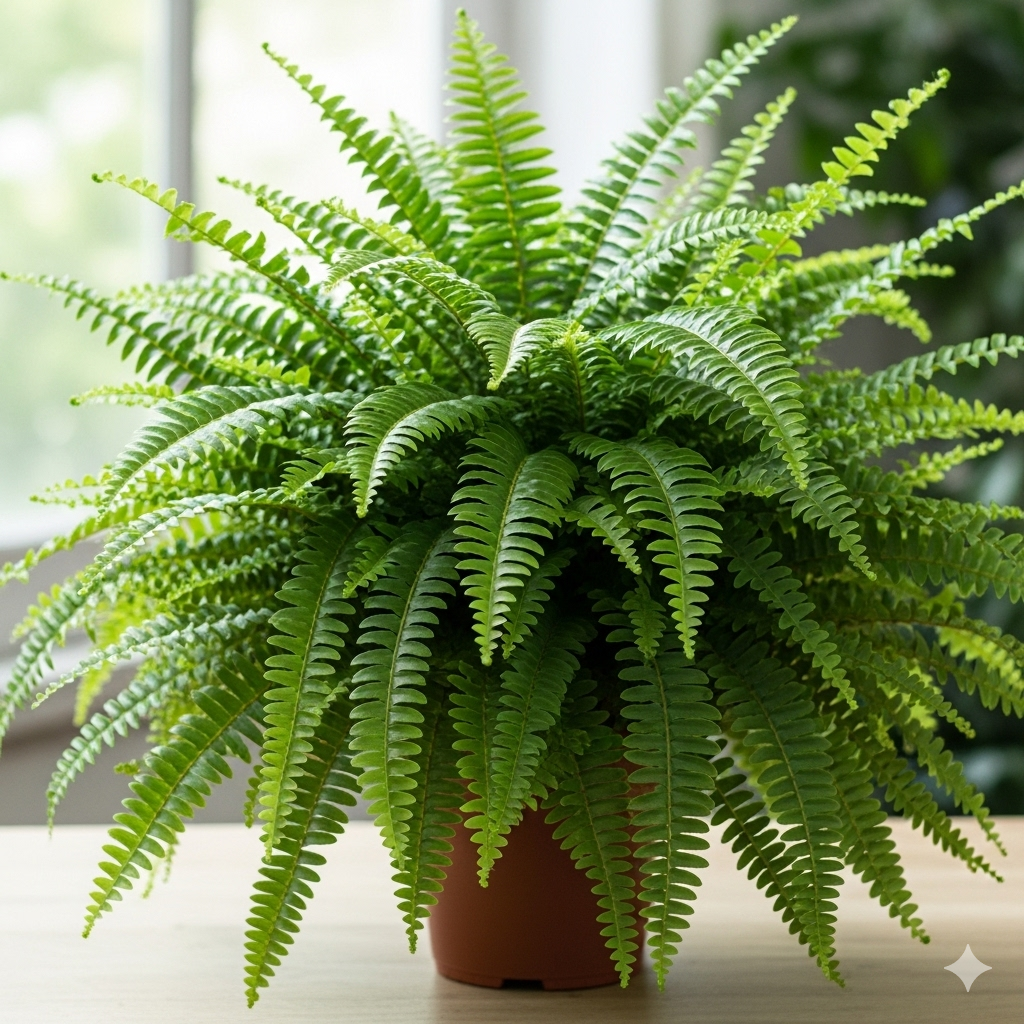
Boston ferns (Nephrolepis exaltata ‘Bostoniensis’) are a timeless favorite for indoor and outdoor plant lovers. Their lush, arching fronds and classic charm make them a popular choice for brightening living rooms, patios, and shaded gardens. Known for their air-purifying qualities and elegant appearance, they’ve remained a staple in homes for generations.
One of the most common questions plant owners ask is: Can Boston ferns grow without direct sunlight? The simple answer is yes—Boston ferns not only grow without direct sunlight, but they actually prefer indirect or filtered light over harsh, direct rays. Let’s explore why this is the case, how light affects their growth, and how to care for Boston ferns in different lighting conditions.
Natural Habitat and Light Preferences
Boston ferns are native to tropical and subtropical regions, where they grow under the canopy of taller plants and trees. In these environments, they thrive in dappled or filtered sunlight rather than the full force of the sun. This natural adaptation makes them perfectly suited for indoor life, where direct sunlight can often be too harsh.
Indoors, Boston ferns perform best in bright, indirect light—the kind of light you’d find near an east-facing window that gets soft morning sun or a north-facing window that provides consistent brightness without intensity. Direct sunlight, especially from south- or west-facing windows, can scorch their delicate fronds, leaving them dry and brown.
Can Boston Ferns Survive Without Direct Sunlight?
Yes, Boston ferns can absolutely survive—and even thrive—without direct sunlight. In fact, direct sun often does more harm than good. Too much exposure dries out their fronds, causes leaf burn, and increases their watering needs.
Instead, they do best when they receive bright but diffused light. For example:
-
Near an east-facing window: Gentle morning rays are ideal.
-
North-facing windows: Consistent low-intensity light works well.
-
Filtered south or west light: Use sheer curtains to soften the intensity.
Boston ferns can also adapt to medium light or slightly shadier corners, but growth may slow, and fronds may lose some of their fullness.
What Happens in Low-Light Conditions?
If a Boston fern is placed in very low-light conditions, it may survive but won’t flourish. Common signs include:
-
Slower growth or fewer new fronds.
-
Yellowing or thinning leaves.
-
Drooping or sparse appearance.
While the plant may remain alive in dim light, it will not maintain the lush, bushy look that makes it so attractive. To help in such situations, you can use supplemental lighting to provide the brightness it’s missing.
Using Artificial Light
For homes and offices with limited natural light, Boston ferns can do well under artificial lighting. Fluorescent or LED grow lights that mimic natural daylight are excellent options. Place the light about 12–24 inches above the fern and keep it on for 10–12 hours daily. This setup ensures the plant receives the energy it needs for photosynthesis without the risk of leaf burn.
Tips for Growing Boston Ferns Without Direct Sunlight
If you’re keeping your fern in indirect or filtered light, here are some extra care tips to ensure it thrives:
-
Maintain humidity
Boston ferns love moisture. If your home is dry, use a humidifier, mist the leaves regularly, or place a tray of water and pebbles nearby. -
Water consistently
Keep the soil evenly moist, but avoid soggy conditions. Allow the top inch of soil to dry slightly before watering again. -
Rotate the plant
Turn your fern every couple of weeks so all sides get equal exposure to the light source. -
Prune old fronds
Removing yellow or brown fronds encourages fresh, healthy growth. -
Avoid drafts and heat vents
Place your fern away from heaters, radiators, or air-conditioning vents that dry out the air.
When Indirect Light Isn’t Enough
If your fern looks thin or struggles despite your efforts, it may not be getting enough light. Moving it closer to a brighter window with filtered light or introducing artificial lighting can restore its health. Remember, Boston ferns are resilient but need at least some brightness to thrive.
Final Thoughts
Boston ferns not only grow without direct sunlight—they actually prefer it that way. Harsh sun can damage their fronds, while bright, indirect light provides the perfect balance for lush, vibrant growth. They can tolerate lower light conditions but will look their best with consistent, diffused brightness and proper care.
If you want to enjoy the full beauty of a Boston fern indoors, skip the direct sunlight and instead provide a spot with gentle, filtered light, regular watering, and good humidity. With these conditions, your fern will reward you with rich, cascading greenery that enhances any indoor or shaded outdoor space.