
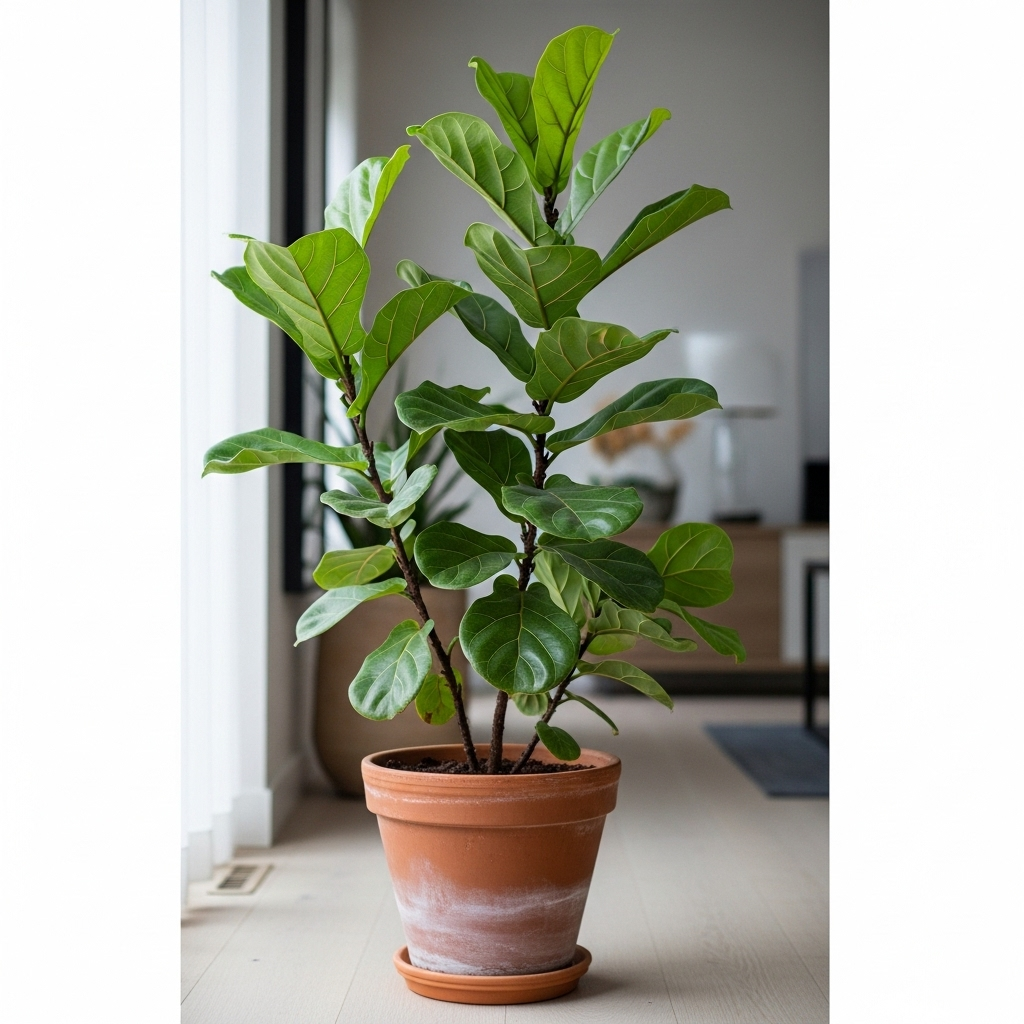
The fiddle leaf fig (Ficus lyrata) is one of the most popular indoor plants, admired for its large, glossy leaves and sculptural appearance. While it can transform any room into a stylish green haven, this tropical plant is often considered finicky because it has very specific care needs. One of the most crucial factors in keeping a fiddle leaf fig healthy is providing it with the right amount of sunlight. Too much or too little light can quickly affect its growth and appearance. By understanding how this plant interacts with light and learning how to choose the best spot in your home, you can help your fiddle leaf fig thrive for years.
Understanding the Light Needs of Fiddle Leaf Fig
In its native environment of West Africa, the fiddle leaf fig grows beneath tall trees where it receives bright but filtered sunlight. This natural habitat explains why the plant prefers lots of light indoors but struggles with direct, harsh rays that can scorch its leaves. The ideal condition for fiddle leaf figs is bright, indirect sunlight. They need several hours of good light each day to maintain their deep green color and upright growth.
If the plant does not get enough light, you may notice slow growth, pale or yellowing leaves, and even leaf drop. On the other hand, exposure to intense midday sun can cause brown patches, also known as sunburn, on the foliage. The goal is to replicate the dappled light of its natural setting as closely as possible.
Choosing the Best Spot Indoors
The placement of your fiddle leaf fig is key. A south-facing or east-facing window is usually the best location since these spots receive strong light throughout the day without the harshest afternoon intensity. If your windows face west, you can still keep your plant nearby, but it is often wise to use a sheer curtain to filter the sunlight.
North-facing windows generally do not provide enough light on their own, which can make growth slow and cause the plant to lean toward the light source. In this case, supplementing with a grow light can help.
When placing your plant, keep in mind that fiddle leaf figs dislike being moved frequently. They take time to adjust to a new spot, and constant relocation can stress them. Choose a location that gets consistent light and stable indoor conditions.
Signs Your Fiddle Leaf Fig Needs More or Less Light
Since fiddle leaf figs are sensitive, they will quickly tell you if they are unhappy with their light conditions. Here are some common signs to watch for:
-
Too little light: Leggy stems, small new leaves, yellowing, or dropping leaves.
-
Too much light: Brown, crispy patches on the leaves, especially on the side facing the sun.
-
Uneven light: The plant leans strongly toward one side or window.
If you notice these issues, adjusting your plant’s location is often the solution. For example, if your plant is stretching toward the window, rotate it every few weeks to encourage even growth. If it’s getting too much sun, simply move it a few feet back or add a curtain for protection.
Using Grow Lights for Extra Support
Not every home has the perfect natural lighting, especially in apartments or during darker winter months. In these cases, a grow light can be a valuable tool. LED grow lights that provide full-spectrum light mimic natural sunlight and can help keep your fiddle leaf fig healthy. Place the light about one to two feet above the plant and keep it on for 6–8 hours a day. This extra boost ensures that your plant continues to photosynthesize and produce new growth even in less-than-ideal conditions.
Additional Tips for Sunlight Care
-
Avoid sudden changes: Moving a fiddle leaf fig from a dim corner directly into bright sun can shock the plant. Always transition gradually.
-
Dust the leaves: Dust can block light absorption, so wipe the leaves regularly with a damp cloth.
-
Monitor seasonal changes: Sunlight angles shift throughout the year. A spot that was bright in summer may become darker in winter. Adjust placement as needed.
-
Pair light with other care factors: Adequate water, proper soil, and occasional fertilizer are also important for keeping your plant strong enough to use the light it receives.
Conclusion
Finding the right sunlight spot is one of the most important steps in caring for a fiddle leaf fig. These stunning plants thrive in bright, indirect light and reward consistent conditions with lush, glossy leaves. By observing how your plant reacts to its environment and making small adjustments, you can strike the perfect balance between too much and too little light. Whether near a sunny window or supported by a grow light, your fiddle leaf fig can grow into a long-lasting centerpiece in your home when given the light it craves.