
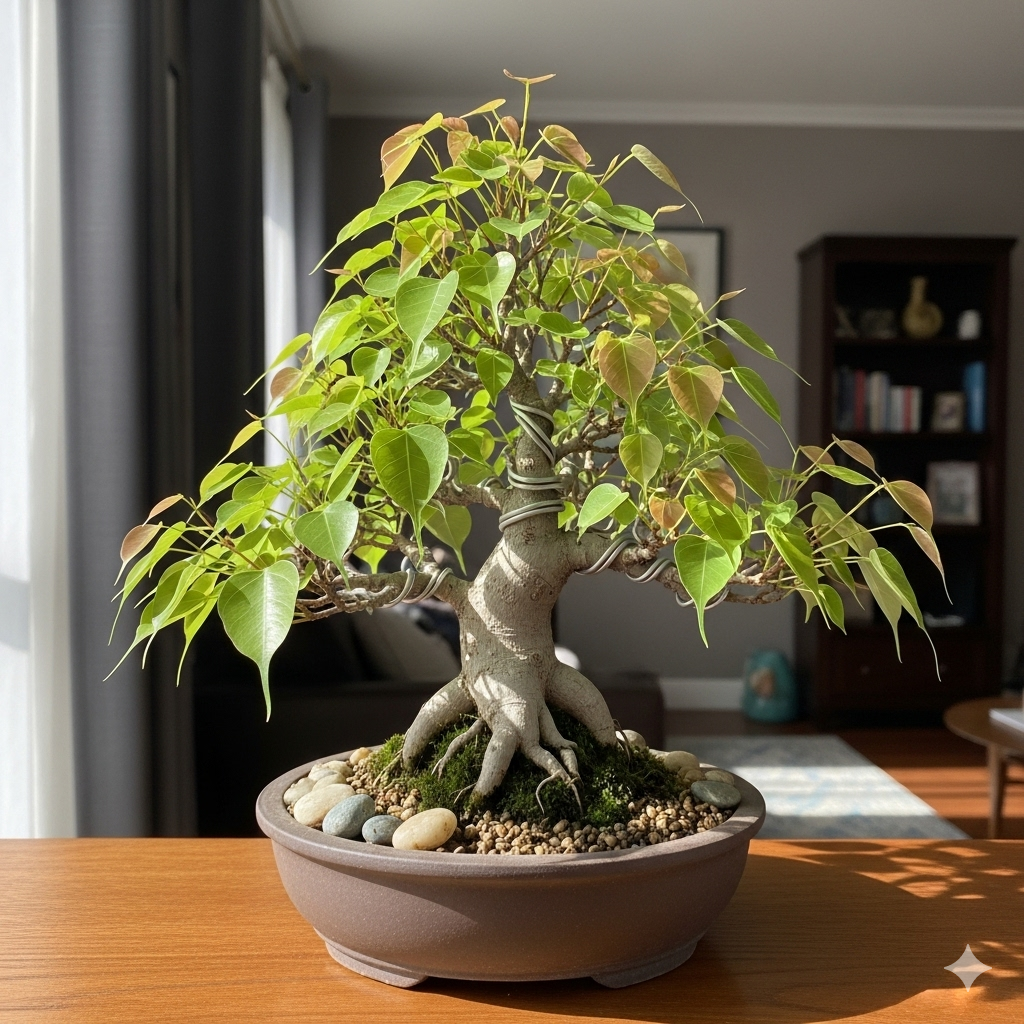
Plants have always held a special place in homes, not only as elements of beauty but also as symbols of deeper meaning. Across cultures, certain plants are seen as sacred or lucky, believed to carry protective, healing, and prosperous energy. Among these revered plants is the Peepal tree (Ficus religiosa), often celebrated as a sacred symbol in spirituality, mythology, and culture. When cultivated as a bonsai, the Peepal brings the same aura of sanctity and good fortune into the household—making it a unique blend of elegance, tradition, and positivity.
The Sacredness of the Peepal Tree
The Peepal tree holds a special place in history and tradition. In Hinduism, Buddhism, and Jainism, it is regarded as a sacred tree symbolizing wisdom, longevity, and spiritual growth. It is famously associated with enlightenment, as it was under a Peepal tree that Siddhartha Gautama attained Buddhahood and became the Buddha.
Its heart-shaped leaves, which gently sway even with the faintest breeze, are seen as symbols of peace and renewal. When grown as a bonsai, the Peepal becomes more than a decorative piece—it transforms into a miniature symbol of spiritual energy and divine blessing within the home.
Symbolism: Luck, Longevity, and Prosperity
The Peepal Bonsai is believed to embody qualities of protection, healing, and prosperity. Its association with longevity makes it a powerful good luck plant for households that value stability and generational harmony.
-
Luck and Protection: Traditionally, the Peepal tree is thought to guard against misfortune and negativity. Keeping it indoors is believed to shield the home from harmful energy.
-
Longevity and Renewal: Its evergreen nature represents resilience and the continuous cycle of life, reminding families of endurance and growth.
-
Prosperity and Wisdom: The Peepal is linked with both material abundance and spiritual enlightenment, symbolizing balance between worldly success and inner peace.
This blend of qualities makes the Peepal Bonsai an ideal plant for homes where prosperity, harmony, and sacredness are deeply valued.
Feng Shui and Vastu Beliefs
In Feng Shui, the Peepal tree is seen as a plant that enhances spiritual energy and uplifts the vibrancy of a home. Its lush, heart-shaped leaves are linked with balance, positivity, and renewal. A Peepal Bonsai, in particular, is believed to stabilize household energy while promoting peace and harmony among family members.
According to Vastu Shastra, placing the plant in the northeast or east direction of the home is considered most auspicious. These orientations are associated with clarity, growth, and prosperity. A healthy, thriving Peepal Bonsai placed in these areas is thought to invite blessings, positive energy, and divine grace into the household.
Aesthetic and Spiritual Appeal
The Peepal Bonsai beautifully bridges the gap between spirituality and aesthetics. Its sculptural trunk and delicate canopy of leaves create a calming presence, making it an attractive focal point in living rooms, meditation corners, or entryways. Its peaceful energy makes it especially suitable for spaces where relaxation, mindfulness, or prayer take place.
The movement of its leaves, which respond even to the gentlest breeze, is often seen as a visual reminder of life’s constant rhythm. For many homeowners, the bonsai form makes it more accessible—bringing the sacred symbolism of the full-grown tree into the scale of everyday living spaces.
Caring for a Peepal Bonsai
While the Peepal Bonsai requires more attention than some low-maintenance houseplants, it rewards caretakers with its resilience and beauty when properly nurtured.
-
Light: The Peepal thrives in bright, indirect sunlight. Place it near a sunny window or on a balcony where it receives ample light.
-
Watering: Keep the soil evenly moist but avoid overwatering. Allow the top layer of soil to dry slightly before watering again.
-
Soil: Use well-draining soil rich in organic matter to support healthy root growth.
-
Pruning: Regular pruning helps maintain the bonsai’s compact shape and encourages fuller foliage. Trim carefully to highlight its natural beauty.
-
Temperature: It prefers warm climates and should be protected from extreme cold or frost.
-
Repotting: Repot every couple of years to refresh the soil and prevent root congestion.
Consistent care helps the Peepal Bonsai flourish, reflecting the symbolic connection between nurturing the plant and inviting harmony into the home.
A Meaningful Gift of Sacred Energy
Because of its sacred symbolism, the Peepal Bonsai makes an especially meaningful housewarming or spiritual gift. It conveys wishes of protection, prosperity, and inner peace, serving as a living blessing for new households. Unlike flowers that fade, a thriving Peepal Bonsai continues to grow and flourish, carrying its sacred aura into the home for years to come.
Conclusion
The Peepal Bonsai is more than just a houseplant—it is a sacred symbol of protection, longevity, and prosperity. Its strong cultural roots, spiritual associations, and calming presence make it an ideal choice for homes seeking not only beauty but also deeper meaning and positive energy.
For families starting a new chapter or individuals looking to bring balance into their living spaces, the Peepal Bonsai is a living reminder of resilience, wisdom, and divine blessing. With proper care, it becomes both a spiritual anchor and a symbol of good luck, enriching the home with protection and positivity for generations.