
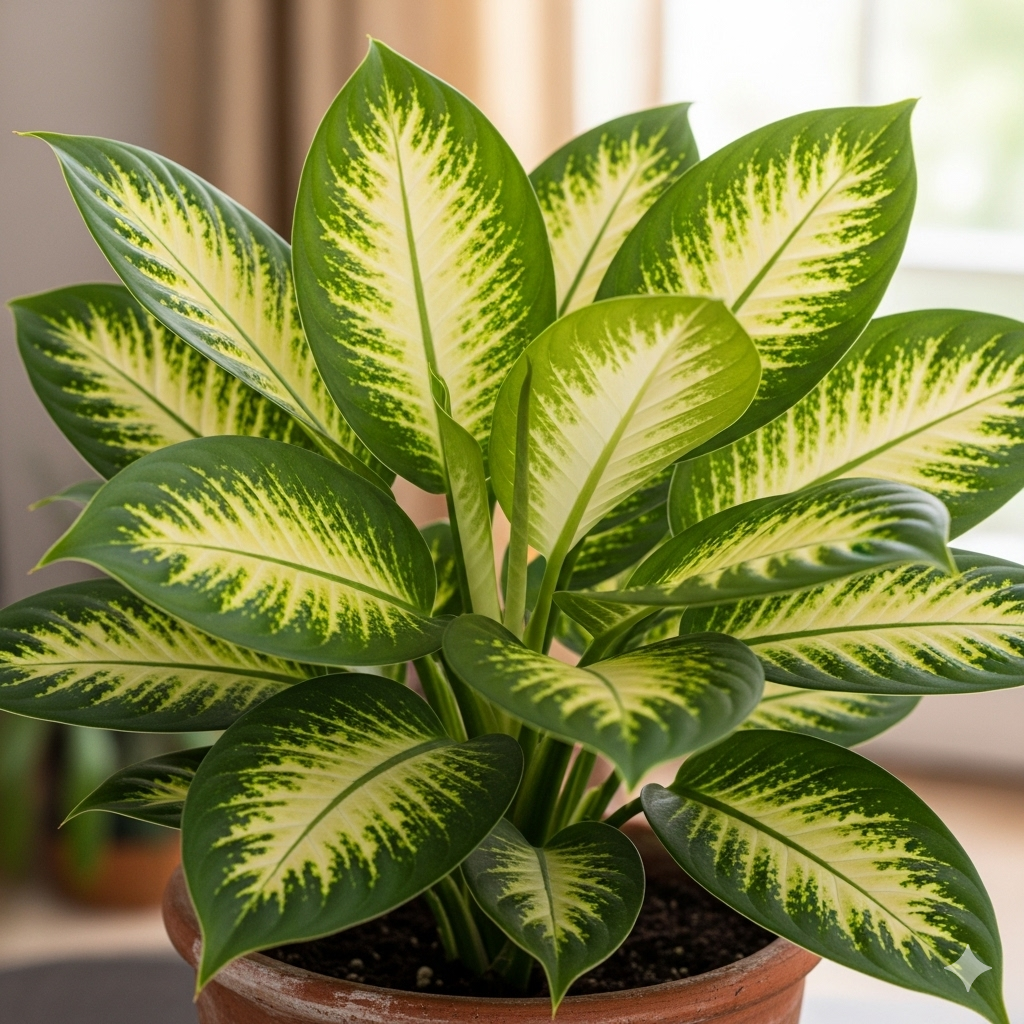
Dieffenbachia, often referred to as “dumb cane,” is a popular houseplant admired for its striking foliage and easy-going nature. With its large, patterned leaves featuring shades of green, cream, and yellow, this tropical plant can instantly brighten up any room. One of the reasons it’s so widely chosen for homes and offices is its ability to adapt to different indoor conditions. But a common question plant owners ask is: Can Dieffenbachia grow in low light?
The short answer is yes—Dieffenbachia can survive in low-light conditions. However, like many houseplants, its growth, health, and appearance are strongly influenced by the quality and amount of light it receives. To keep your Dieffenbachia thriving, it’s important to understand how it responds to light and what adjustments you can make in darker rooms.
Native Habitat and Light Preferences
Dieffenbachia originates from the tropical forests of Central and South America. In the wild, it grows beneath taller trees, where sunlight is filtered through dense foliage. This natural environment explains why it is so adaptable indoors—it’s used to receiving indirect or dappled light rather than strong, direct sun.
Indoors, Dieffenbachia typically performs best in bright, indirect light, where its leaves maintain vibrant patterns and the plant grows steadily. However, it is also tolerant of lower light, which makes it a good option for spaces where sunlight is limited.
Can Dieffenbachia Survive in Low Light?
Yes, Dieffenbachia can survive in low light, but its appearance may change. In dim environments, the plant often grows more slowly, and its signature leaf variegation may fade, leaving leaves with more solid green tones. While it won’t die in low light, it won’t look as lush or produce as many new leaves as it would in brighter conditions.
Signs of Light Stress
Understanding how your Dieffenbachia reacts to light is key to keeping it healthy. Here are some signs that indicate it isn’t getting the right amount of light:
-
Too little light: Growth slows, stems become leggy, and leaves may lose their variegation. The plant might also lean toward the nearest light source.
-
Too much direct light: Leaves may develop brown patches, scorched edges, or a bleached appearance.
-
Just enough light: The plant maintains bold leaf patterns, produces new growth regularly, and appears full and vibrant.
By paying attention to these signs, you can make simple adjustments to your plant’s location to improve its overall health.
Tips for Growing Dieffenbachia in Low Light
If your space has limited sunlight, you can still enjoy a healthy Dieffenbachia with a few adjustments:
-
Place near the brightest spot available
Even if your room is dim, positioning the plant near a north- or east-facing window helps it get some natural brightness without the risk of harsh sun. -
Use sheer curtains for filtered light
If you only have south- or west-facing windows, use light curtains to soften the rays. Direct sun can damage the broad leaves. -
Rotate regularly
Turning the plant every couple of weeks ensures even light distribution and prevents leaning. -
Supplement with grow lights
In very low-light areas, full-spectrum LED grow lights are an excellent way to provide the plant with the brightness it needs. Keep the light about a foot above the plant and run it for 10–12 hours daily. -
Adjust watering habits
In lower light, Dieffenbachia uses less energy and water. Let the top inch of soil dry out before watering again to avoid root rot. -
Prune to maintain shape
Low light can make stems grow leggy. Pruning helps encourage fuller, bushier growth.
Varieties and Their Light Tolerance
Some Dieffenbachia varieties are more tolerant of low light than others. Generally, cultivars with darker green leaves adapt better to shade, while those with more variegation require brighter conditions to maintain their patterns. If your space is consistently dim, choosing a darker-leaved variety may give you better results.
When Low Light Isn’t Enough
If your Dieffenbachia looks unhealthy despite being in a low-light room, it may need supplemental lighting. While the plant can tolerate less-than-ideal conditions for a while, it won’t thrive in very dark spaces without assistance. A simple grow light can make a big difference, keeping your plant vibrant and helping it maintain its decorative appeal.
Final Thoughts
Dieffenbachia is a versatile houseplant that can adapt to a range of lighting conditions, including low light. While it won’t die in dim spaces, its growth will be slower, and its bold leaf patterns may fade. To help it thrive, place it in the brightest indirect light possible, supplement with artificial lighting if needed, and adjust your care routine accordingly.
With the right attention, Dieffenbachia can remain a stunning focal point in your home or office, even in rooms that don’t get much sun. Its resilience, combined with its striking foliage, makes it a reliable choice for plant lovers of all experience levels.