
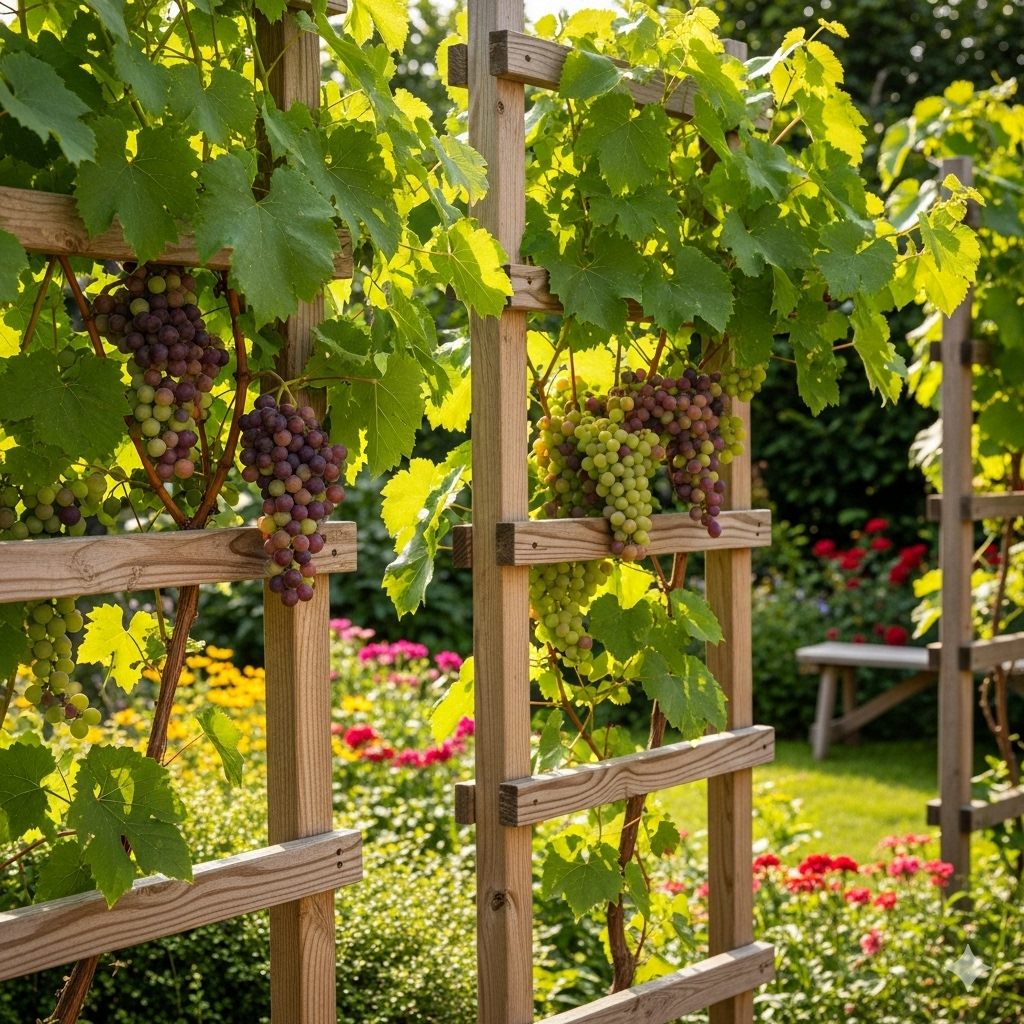
Grape vines are not only a source of delicious fruit but also an ornamental addition to gardens and backyards. Their twisting stems, broad leaves, and cascading bunches of grapes add beauty and abundance to outdoor spaces. However, grapevines cannot thrive without proper support. These vigorous climbers need strong structures to guide their growth, encourage healthy fruiting, and maintain order in the garden.
Among the various materials available, wooden trellises remain a timeless choice. They combine strength with natural aesthetics, blending seamlessly into garden landscapes. Choosing the right trellis style can make a significant difference in the health, productivity, and beauty of your grapevines.
Why Grape Vines Need Trellises
Without support, grapevines grow uncontrollably along the ground, leaving fruit vulnerable to pests, rot, and uneven ripening. A well-designed trellis helps in several ways:
-
Improves Sunlight Exposure – Grapes need consistent sunlight for proper sugar development. Trellises spread vines evenly, ensuring every cluster receives light.
-
Encourages Air Circulation – Lifting vines reduces humidity, preventing fungal diseases such as powdery mildew.
-
Increases Yield Quality – Supported vines channel their energy into producing healthier, more abundant fruit.
-
Simplifies Maintenance – Trellises make pruning, weeding, and harvesting easier.
-
Adds Garden Beauty – Grapevines climbing along wooden trellises create a rustic and picturesque setting.
Advantages of Wooden Trellises
Wooden trellises are especially popular for grape cultivation because of their many benefits:
-
Natural Look – Wood complements grapevines beautifully, creating a vineyard-like atmosphere.
-
Customizable – Wooden trellises can be built in various shapes and sizes, adaptable to small gardens or large vineyards.
-
Durable – With proper treatment, wood withstands outdoor conditions while providing reliable strength for heavy vines.
-
Sustainable – Many gardeners prefer wood for its eco-friendliness, especially when using untreated or reclaimed lumber.
-
Cost-Effective – Compared to metal systems, wood is often more affordable and easier to build at home.
Best Wooden Trellis Styles for Grape Vines
Depending on your space, climate, and grape variety, different wooden trellis styles may suit your garden best. Here are some of the most effective and popular options:
1. The Vertical Trellis (Single-Wire System)
This simple style involves a sturdy wooden post with a single horizontal wire or bar across the top. Vines grow upward and spread along the top wire. This method is best for small gardens or beginners because it’s easy to build and maintain. While it supports modest yields, it is not ideal for very vigorous grape varieties.
2. The Two-Wire Trellis
A slight upgrade from the single-wire style, this trellis uses two horizontal wires set at different heights. The lower wire trains young shoots, while the upper wire supports mature canes. This method improves fruit exposure and helps vines grow more evenly.
3. The Four-Arm Kniffin System
This classic vineyard style uses two or more horizontal wires stretched between tall wooden posts. Vines are trained with two arms on each side, creating a balanced structure. It’s one of the most common trellis systems because it maximizes fruiting area, improves sunlight distribution, and makes pruning straightforward.
4. The Pergola or Arbor Trellis
Perfect for gardeners who want beauty and productivity, pergolas and arbors use larger wooden frames that create shaded walkways or seating areas. Vines grow up the posts and spread across the overhead beams, forming a canopy. Grapes dangle down, creating a stunning visual effect. This style is ideal for patios, pathways, or outdoor dining spaces.
5. The Fan Trellis
In this style, vines are trained outward like a fan against a wooden frame. This system works well for limited spaces, such as against fences or walls, while still offering excellent airflow and fruit exposure.
6. The Geneva Double Curtain
A more advanced style, this system involves tall wooden posts with wires on both sides, creating two “curtains” of vines. It requires more space and maintenance but dramatically increases grape production and sunlight penetration.
Tips for Maintaining Wooden Trellises
To ensure longevity and effectiveness of wooden trellises for grapevines, follow these care tips:
-
Choose the Right Wood: Cedar, redwood, and pressure-treated pine are durable choices. Avoid chemically treated wood if grapes are for consumption.
-
Protect Against Weather: Apply a natural, non-toxic sealant to protect the wood from rot and moisture.
-
Anchor Posts Deeply: Grape vines become heavy over time. Secure posts firmly into the ground, at least 2–3 feet deep.
-
Prune Regularly: Trellises perform best when vines are pruned annually to prevent overcrowding.
-
Inspect for Wear: Check annually for loose wires, weakened joints, or rotting wood, and make repairs as needed.
Final Thoughts
A strong, well-designed wooden trellis is essential for cultivating healthy grapevines. Whether you choose a simple vertical design, a classic four-arm Kniffin system, or an elegant pergola, the right trellis ensures better yields, healthier plants, and a more beautiful garden. Wooden trellises combine functionality with rustic charm, turning any backyard or vineyard into a thriving, productive, and inviting space.
By investing in the best wooden trellis style for your needs, you not only support your grapevines but also create a long-lasting structure that enhances your garden’s beauty and productivity year after year.